



The Quick Read
This is the one experience in Eastern Canada that feels genuinely like crossing an ocean. Old Quebec is the only walled city north of Mexico, a UNESCO World Heritage site that has kept its stone ramparts, its cobbled lanes and its French street plan for more than four centuries. You can walk the 4.6-kilometre fortifications, ride an 1879 funicular down to the oldest commercial street on the continent, and stand on the spot where Samuel de Champlain founded the city in 1608. Old Montreal delivers a smaller, more urban version of the same thing, with the Notre-Dame Basilica and 18th-century stone along the Old Port. Beyond the two cities, the Ile d'Orleans and the artist villages of Charlevoix carry French-Canadian heritage into the countryside. Quebec City is the headline here, and it earns it.
Why Eastern Canada Delivers This
The reason is history that never got knocked down. Quebec City was founded in 1608, fortified against the British and the Americans, and then, crucially, preserved rather than redeveloped. The walls still stand, the Citadelle still functions as an army base, and the colonial-era buildings of the Upper and Lower Towns survived into an era that finally valued them. UNESCO recognized the result in 1985 as the most complete fortified colonial town north of Mexico. Nowhere else on the continent gives you that combination of intact walls, period architecture and a living French-speaking culture all in one walkable place.
It also delivers because this is a working culture, not a museum set. Quebec is a French-speaking province of nearly nine million people, and Quebec City is its capital, so the old town is full of locals, not just costumed interpreters. The cooking is French-Canadian, the street signs and conversation are in French, and the festivals, from the summer Festival d'ete to the Winter Carnival, are the city's own. Old Montreal adds the country's most concentrated stretch of 17th and 18th-century architecture, and the rural French heritage of the Ile d'Orleans and Charlevoix shows the same culture out on the land.
Where to Go
Quebec City
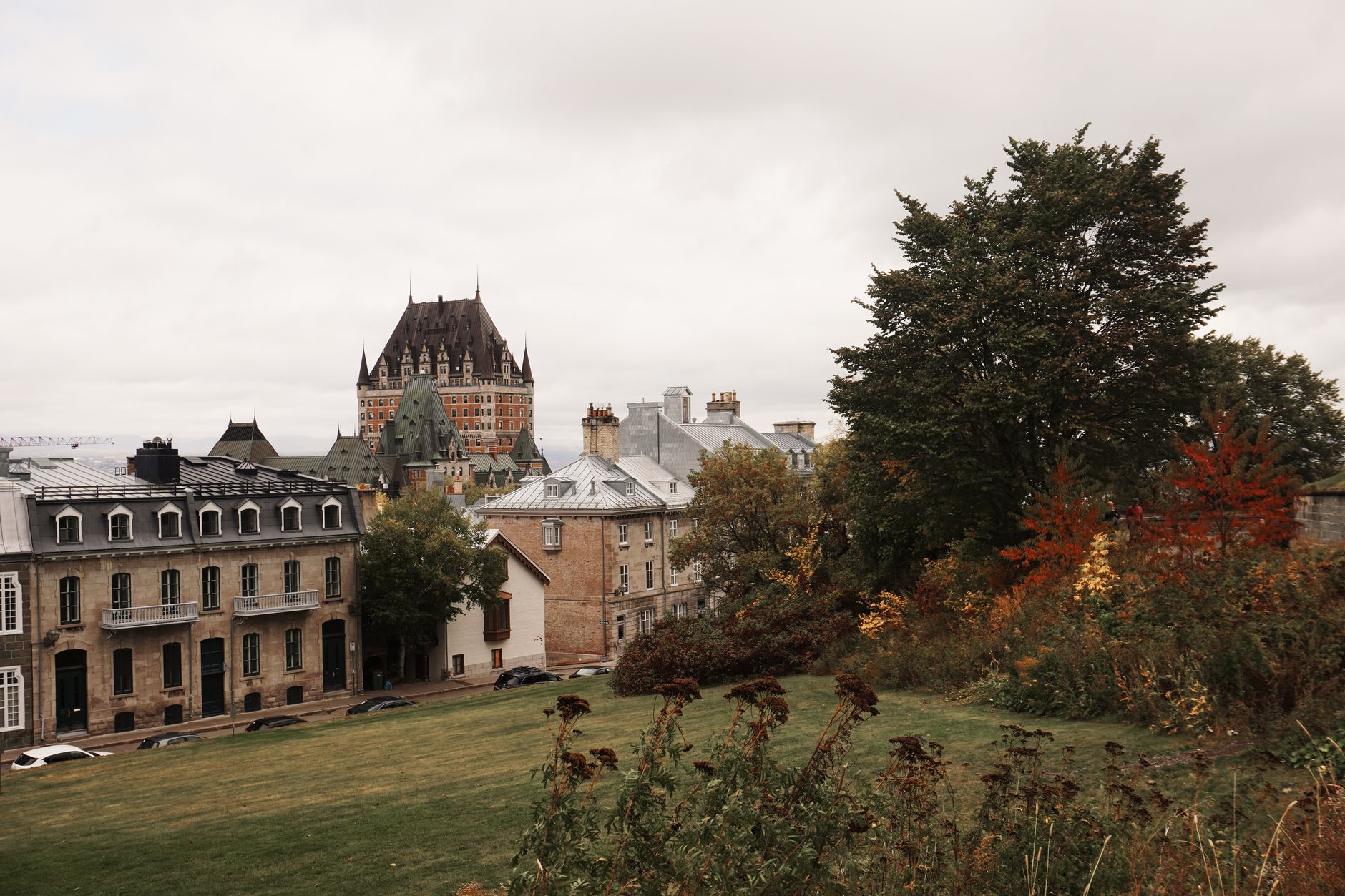
Start in the Upper Town, on the Dufferin Terrace boardwalk below the Chateau Frontenac, with the St. Lawrence laid out beneath you. Walk the fortifications, visit the star-shaped Citadelle, and wander the lanes around the Notre-Dame de Quebec basilica. Then take the funicular, running since 1879, or the Breakneck Stairs down to the Lower Town. Here you reach Place Royale, the square where Champlain established the colony in 1608, anchored by Notre-Dame-des-Victoires, the oldest stone church in North America, built in 1688. The Petit-Champlain quarter beside it is one of the oldest commercial streets on the continent, its 17th-century warehouses now boutiques and cafes under gas lamps. Most of the sights are free to enter; guided walking tours run about 20 to 40 dollars and are worth it for the history.
Old Montreal
A three-hour train from Quebec City, Old Montreal packs the country's best collection of 18th-century stone into a few cobbled blocks along the Old Port. The set piece is the Notre-Dame Basilica, its blue-and-gold interior among the most striking in North America. Wander Place Jacques-Cartier, the waterfront promenade and the narrow side streets, and the old-Europe atmosphere is real even though a modern city rises just behind it.
Ile d'Orleans and Charlevoix
For the rural side of the culture, cross the bridge to the Ile d'Orleans, an island of ancestral farms, stone churches and cideries just minutes from Quebec City, long called the cradle of French Canada. Further along the St. Lawrence, the Charlevoix region around Baie-Saint-Paul is a landscape of artist villages and a painterly coast that drew the Group of Seven and generations of Quebec painters. Both extend the heritage trip out of the city and into the countryside that fed it.
Quebec City rewards more than a quick walk through, so build in time for its set pieces. The Plains of Abraham, the clifftop battlefield park where the British defeated the French in 1759 in the fight that decided the future of the continent, is now a green expanse for walking and picnicking with the river below. The Citadelle, still an active military post, runs a summer changing-of-the-guard ceremony. The Musee de la civilisation in the Lower Town is one of the best museums in the country, and the morning market, the artisan shops of the Quartier Petit-Champlain and the terraces along the river fill the gaps between the landmarks. A guided walking tour at the start of a visit pays off, because the layers of French, British and Canadian history packed into these few blocks are far richer than they first appear.
When to Go
Old Quebec is one of the few destinations in this region that is genuinely worth visiting in any season, and the choice depends on the trip you want. Summer, June through September, is warmest and liveliest, with open-air cafes, street performers and the full festival calendar, though it is also the busiest and dearest. September and October bring thinner crowds, comfortable walking weather and fall colour on the surrounding hills, and many regulars consider autumn the sweet spot.
Winter is the wild card and, for some, the best version of all. Quebec City under snow, with the Chateau lit, sleighs on the terrace and the Winter Carnival in late January and February, is unforgettable, and the cold is part of the atmosphere rather than a problem if you dress for it. The rural sites on the Ile d'Orleans and in Charlevoix are more seasonal, best from late spring through fall when the farms, cideries and galleries are open.
What to Watch Out For
Crowds and hills are the two practical issues in Quebec City. The Petit-Champlain and Place Royale get genuinely packed on summer afternoons and when cruise ships are in port, so walk them early or late for the quiet, photogenic version. The old town is also steep, built on a cliff, so there is a lot of climbing between the Upper and Lower Towns; the funicular helps, and comfortable shoes matter more than usual.
Language is rarely a real barrier but worth a note: this is a French-first city, and while tourism staff switch to English easily, a few French phrases are appreciated and the experience is richer if you lean into the French character rather than expecting it to feel like the rest of Canada. Prices in the old town are tourist-tier, especially for hotels inside the walls in peak season, so book early or stay just outside. Winter visitors should plan for real cold and ice underfoot and pack accordingly.
Who This Is (and Isn't) For
This vibe is for travelers who love history, architecture and atmosphere, for anyone who wants a European-feeling trip without the transatlantic flight, and for couples and photographers drawn to walkable old towns. It rewards slow wandering over checklist sightseeing, and it pairs naturally with the grand-railway-hotels, museums, winter-carnivals and fall-foliage vibes in this corridor. Quebec City in particular suits a long weekend on its own.
It is a weaker fit for travelers chasing wilderness, beaches or modern-city energy; this is cobblestones and ramparts, not coast or skyline. Families with very young children may find the hills and the slower pace a stretch, though older kids tend to love the fort and the funicular. And anyone in a hurry will miss the point, because the value of Old Quebec is in lingering, not ticking off sights.